Machine learning development
Predictive models that turn your data into decisions.
Agleam Labs builds machine learning models trained on your own business data to forecast demand, score risk, recommend products, and flag unusual activity. We take them from analysis to a production service your applications and teams can use every day.
- Forecasting and demand planning
- Classification and scoring
- Recommendation engines
- Anomaly and fraud detection
What we do
Learning from the data you already collect.
Your transactions, sensor readings, customer histories, and operational logs hold patterns that are hard to see by eye. Machine learning finds them and turns them into predictions: how much stock to order, which customers are likely to leave, which transactions look wrong. Unlike language models, these are compact, specialised models trained on your numbers and records.
A model is only useful if it is accurate, explainable enough to trust, and wired into the systems where decisions are made. We start with the data and a clear baseline, compare approaches honestly, and deploy the winner as a reliable service with monitoring that warns you when its performance starts to slip.
What we deliver
Machine learning for core business problems.
We focus on well-proven techniques that deliver measurable improvement over current practice.
01 Forecasting +
- Time series
- Demand planning
- Seasonality
- Prediction intervals
Demand, sales, workload, and cash-flow forecasts that account for seasonality, promotions, and external factors, with uncertainty ranges rather than single guesses.
02 Classification and scoring +
- Churn
- Lead scoring
- Risk scoring
- Explainability
Models that score leads, assess credit or churn risk, and route cases to the right team, with explanations of what drove each score.
03 Recommendation systems +
- Collaborative filtering
- Personalisation
- Ranking
- Cross-sell
Personalised product, content, and next-best-action recommendations based on behaviour, similarity, and business rules such as stock and margin.
04 Anomaly detection +
- Fraud signals
- Sensor data
- Outliers
- Alerting
Detection of unusual transactions, equipment readings, or system behaviour, tuned to keep false alarms low enough that teams act on them.
05 Pricing and optimisation +
- Price elasticity
- Optimisation
- Scheduling
- Scenario analysis
Models that estimate price sensitivity and support decisions on pricing, scheduling, and resource allocation within your constraints.
06 Data preparation and feature engineering +
- Data cleaning
- Feature stores
- ETL
- Data quality
Cleaning, joining, and transforming raw data into reliable features, with pipelines that run the same way in training and production.
07 Model deployment and integration +
- REST APIs
- Batch scoring
- Dashboards
- Integration
Models served through APIs or batch jobs and connected to your applications, dashboards, and workflows, so predictions reach the people who use them.
Why machine learning
Better decisions, made consistently.
-
Sharper forecasts
Plans based on patterns in your history rather than rules of thumb.
-
Problems caught early
Anomalies and risks flagged as they appear, not at month end.
-
Personal at scale
Every customer sees recommendations suited to them, without manual curation.
-
Efficient and cheap to run
Specialised models are fast and inexpensive compared with general-purpose AI.
-
Explainable results
Clear drivers behind each prediction help teams understand and trust the output.
-
Wondering what your data could predict? Book a free consultation and we will look at it with you.
Book a free consultation →
Why Agleam Labs
Data science with production engineering.
Hover or tap a card to see what it means in practice.
How we work
From raw data to live predictions.
-
01
Frame and explore
We define the decision to improve, explore your data, and set a baseline to beat.
-
02
Prepare and model
We build data pipelines and features, then train and compare candidate models.
-
03
Validate with the business
We test on unseen data and review results with your team before anything goes live.
-
04
Deploy and monitor
We serve the model in production, connect it to your systems, and track its performance over time.
Agleam Labs in numbers
- Enterprise apps delivered
- 50+
- Enterprise apps delivered
- On-time delivery
- 99.8%
- On-time delivery
- Years of senior experience
- 10–30
- Years of senior experience
- Years of DevOps experience
- 20+
- Years of DevOps experience
- Technologies in production
- 20+
- Technologies in production
- Office, worldwide clients
- 1
- Office, worldwide clients
Technology
Our machine learning toolkit.
Mature, well-supported libraries and platforms that your team can maintain.
-
 Python
- scikit-learn
- XGBoost
- LightGBM
- PyTorch
- TensorFlow
- pandas
- Prophet
- SQL
- Apache Spark
- SageMaker
- Azure ML
- Vertex AI
-
 AWS
-
 Docker
-
 Monitoring
Industries
Predictive models across industries.
Wherever decisions repeat and data accumulates, machine learning can improve the outcome.
 E-Commerce
Commerce technology connecting customers, inventory, payments, and retail operations.
 FinTech
Payment, lending, and transaction platforms for always-on financial operations.
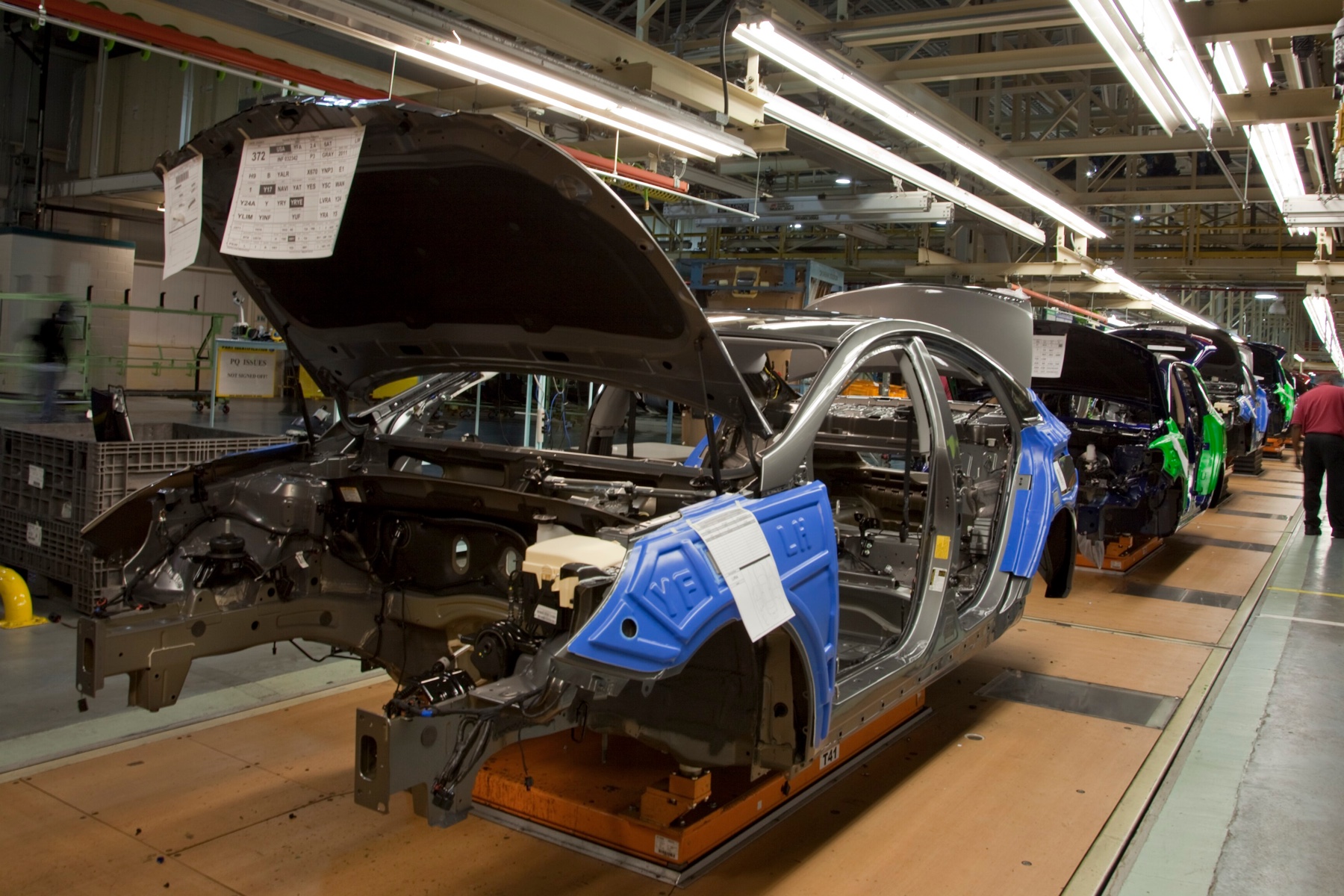 Manufacturing
Industrial software that connects production, inventory, quality, and plant operations.
 Logistics
Platforms for fleets, shipments, warehouses, and connected supply-chain operations.
 Telecom
Digital platforms, integrations, and service systems for continuous delivery.
 Healthcare
Secure digital systems for data-heavy healthcare workflows and service delivery.
FAQs
Machine learning questions.
Straight answers about machine learning with Agleam Labs.
Talk to an expert
Tell us what you are working on. A senior engineer will reply with honest advice and a suggested next step.
Book a call →How is machine learning different from generative AI? + −
Machine learning models here are trained on your structured data to predict a number or category, such as demand or risk. Generative AI produces text or images. Predictive models are usually smaller, cheaper to run, and easier to measure.
How much data do we need? + −
It depends on the problem. Forecasting typically needs a couple of years of history to capture seasonality; classification needs enough labelled examples of each outcome. We assess your data before committing to a build.
Can you explain why a model made a prediction? + −
Yes. We use interpretable models where possible and explanation techniques for complex ones, so each prediction can show the main factors behind it.
What if our data is messy? + −
Most business data is. Data preparation is a normal part of every project, and we tell you early if quality problems will limit what a model can achieve.
How do models stay accurate over time? + −
We monitor input data and prediction quality in production. When behaviour shifts, the model is retrained on recent data, ideally through an automated pipeline.
How long does a machine learning project take? + −
A first production model typically takes eight to fourteen weeks, including data preparation, modelling, and deployment. A shorter feasibility study can come first if the data is uncertain.
Start a project
Let's see what your data can predict.
- A free consultation with a senior engineer
- Clear scope, timeline, and budget
- Confidential, with an NDA on request
- Support after delivery
Prefer email?
info@agleamlabs.comMake your next decision with better evidence.
Tell us which decision you want to improve and what data you hold. We will come back with an approach and an estimate.